Freeman Grattan Holdings Case Study
While at Freeman Grattan Holdings (FHG) in the late 2010s I was working on a team tasked with replacing an outdated, clunky, IE6 Only system with something more up to date. Early research into the problem created a single insight that oiled the project.
The Direct Despatch system allowed Retailers & Suppliers to sell their products through the FHG websites and app. They added their product to our store, but kept the product in their warehouse, in effect giving them an extra shop window. Through a series of interviews with Retailers & Suppliers, it became obvious that products always outnumbered time available to add products, and that the FGH Direct Despatch system operated in competition with rivals in our industry, including Amazon. On Amazon's platform Retailers & Suppliers could add around one hundred and twenty products each hour, with FGH Direct Despatch, they could add around eighteen.
Often in User Experience projects we are concerned with people's attention, but in this case our currency was hours and minutes, and those hours and minutes was being frittered away.
Armed with this information, I created A Convincer Document to illustrate the project aims to Stakeholders. With the metric of "Products/Hour" established, the project team's work had a standard to be measured against, and the project had a focus.
I created User Experience Journeys focused around processes which Retailers & Suppliers regularly used, slicing off blockers while enabling multiple products to be processed in a single action. My Designs followed that, giving rich details when needed, only providing the details Retailers & Suppliers use in other places. The Development Team only passed the information my front end needed, and buffered responses, preventing FGH Direct Despatch slowing down as it processed user's actions.
My User Experience moved on the promise of more products being processed improved our bottom line, and it worked. That thinking spread around the websites and apps, creating an interface briefed information briefed quickly, allowed for deep investigation, but concerned itself most with Retailers & Supplier's processing products.
At project end, "Products/Hour" was around one hundred and ten. As far as I know, the team is still working on squeezing out those extra percentage points.
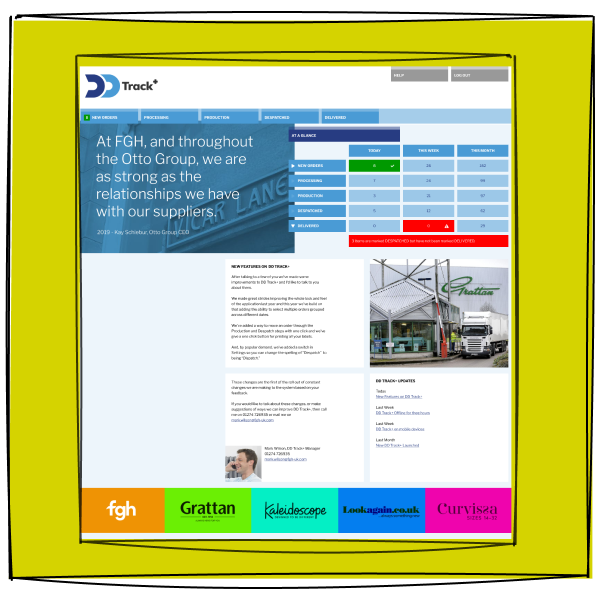
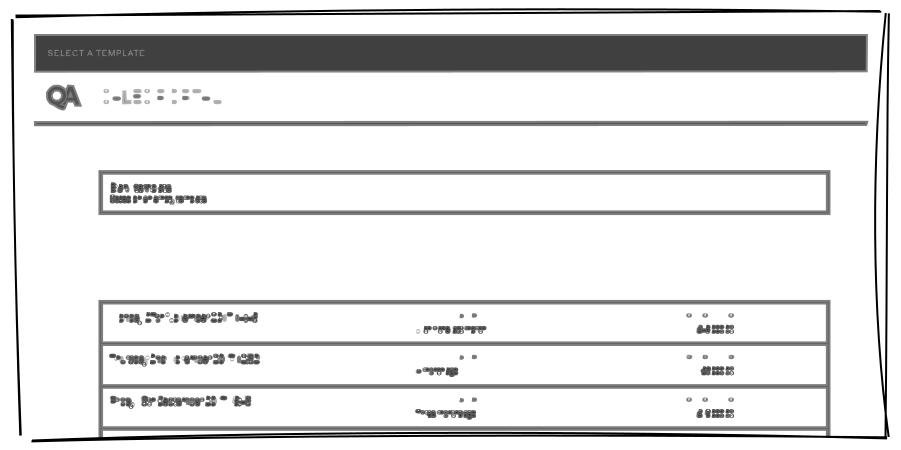
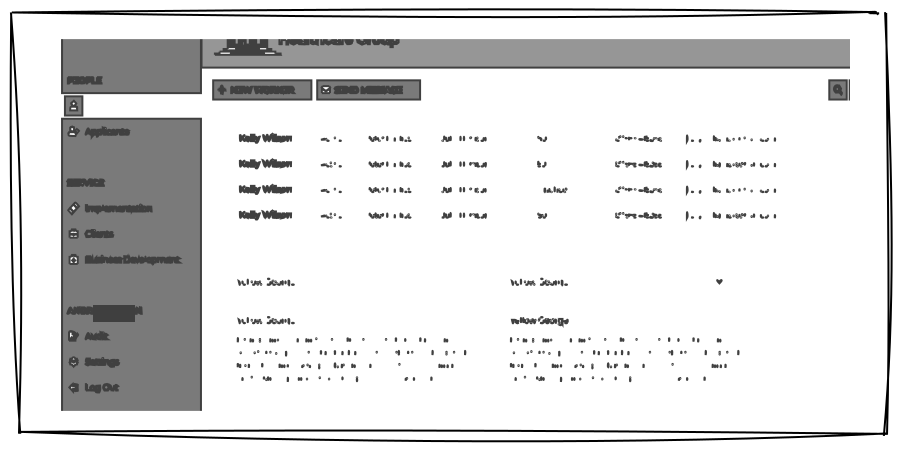
DDT+ Dashboard.
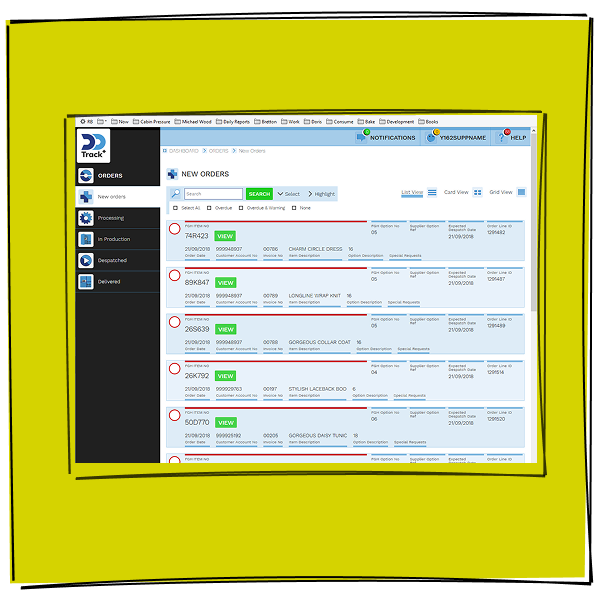
The workings of DDT+.
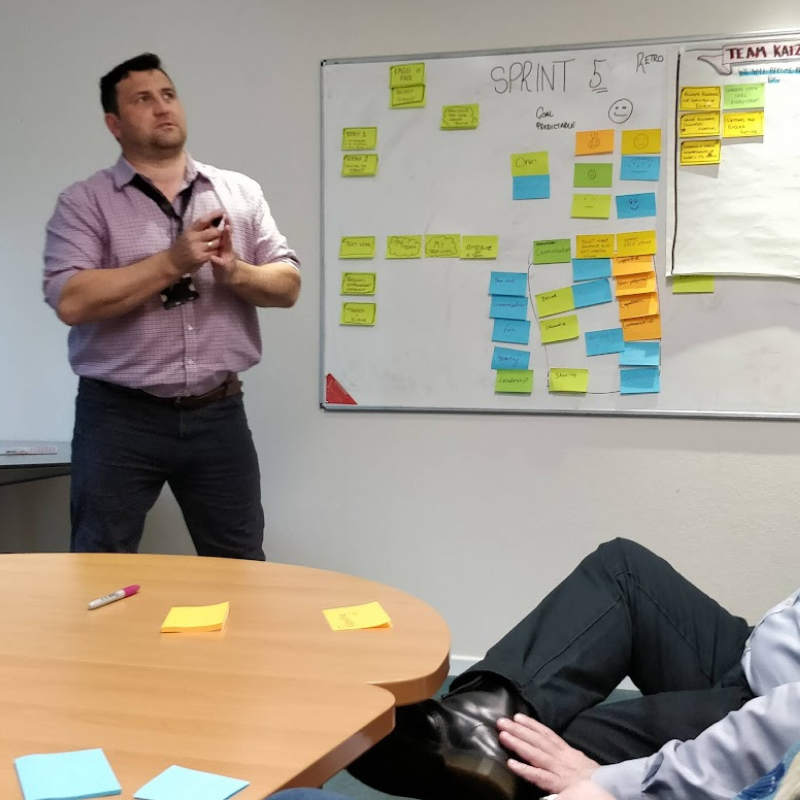
Master of the Scrum Number One.
Master of the Scrum Number Two.